
As we approach 2026, many people are eager to know when the first day of summer will occur. For those in the Northern Hemisphere, the answer is straightforward: the first day of summer is marked by the summer solstice, which occurs on June 21, 2026. This astronomical event not only signals the beginning of the season but also brings with it the longest day of the year. In this article, we’ll explore what the summer solstice means, why it matters, and how you can prepare for it.
What Is the Summer Solstice?
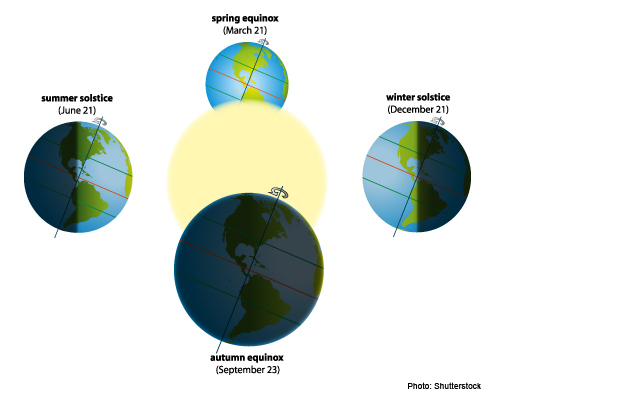
The summer solstice is the moment when the Earth’s axial tilt is most inclined toward the Sun, resulting in the longest day of the year in the Northern Hemisphere. This happens because the Earth’s axis is tilted at approximately 23.5 degrees relative to its orbit around the Sun. During the summer solstice, the North Pole is tilted as close as it gets to the Sun, causing the Sun to appear at its highest point in the sky.
In the Southern Hemisphere, the same moment marks the winter solstice, where the South Pole is tilted away from the Sun, leading to the shortest day of the year.
When Is the First Day of Summer 2026?

For the Northern Hemisphere, the first day of summer in 2026 will be on June 21, 2026, at 8:24 UTC (Coordinated Universal Time). However, the exact local time may vary depending on your time zone. For example:
- In New York (Eastern Daylight Time), the solstice will occur at 4:24 a.m. on June 21.
- In Los Angeles (Pacific Daylight Time), it will be 1:24 a.m. on June 21.
- In London (Greenwich Mean Time), it will be 8:24 a.m. on June 21.
In the Southern Hemisphere, the summer solstice will occur on December 21, 2026, marking the start of their summer season.
Why Does the Exact Time Matter?

The summer solstice is not just a date on the calendar—it’s a precise astronomical moment. The exact time is determined by the alignment of the Earth and the Sun, which changes slightly each year due to the Earth’s elliptical orbit and the gravitational influences of other celestial bodies.
This precision is important for several reasons:
- Cultural and Historical Significance: Many ancient cultures celebrated the solstice with festivals, rituals, and ceremonies, often tied to agriculture, spirituality, or the changing of seasons.
- Scientific Research: Astronomers use the solstice to study the Earth’s position in space and track long-term climate patterns.
- Local Planning: Whether you’re planning a trip, organizing an event, or simply wanting to enjoy the longest day of the year, knowing the exact time helps you make the most of it.
How Does the Summer Solstice Affect Day Length?
On the day of the summer solstice, the Northern Hemisphere experiences the longest day of the year and the shortest night. The amount of daylight varies depending on your latitude:
- In cities near the equator, such as Bogota, Colombia, the longest day is about 12 hours and 23 minutes.
- In more northern locations, like Whitehorse, Canada, the longest day can last up to 19 hours and 9 minutes.
After the solstice, the days gradually become shorter until the autumnal equinox, when day and night are roughly equal in length.
What Are the Differences Between Astronomical and Meteorological Summer?

There are two ways to define the start of summer:
- Astronomical Summer: Begins on the summer solstice (June 21) and ends on the autumnal equinox (September 22 or 23).
- Meteorological Summer: Starts on June 1 and ends on August 31, based on temperature patterns rather than the Earth’s position relative to the Sun.
While astronomers and many cultures follow the astronomical definition, meteorologists and some countries use the meteorological one for consistency in weather data and seasonal forecasts.
How Can You Celebrate the Summer Solstice?

The summer solstice has been celebrated for centuries across different cultures. Some popular ways to mark the occasion include:
- Watching the sunrise: Many people gather at ancient sites like Stonehenge or natural landmarks to witness the sun rising over the horizon.
- Hosting outdoor events: Picnics, bonfires, and music festivals are common during this time.
- Stargazing: After the solstice, the longer nights provide excellent opportunities for astronomy enthusiasts to observe the night sky.
- Participating in rituals: Some cultures still practice traditional solstice celebrations, such as lighting candles, dancing, or offering thanks to nature.
Final Tips for Enjoying the First Day of Summer 2026
To make the most of the first day of summer 2026, consider the following:
- Check local times: Convert the UTC time to your local time zone to plan accordingly.
- Plan for visibility: If you’re hoping to see the solstice, check the weather forecast and ensure clear skies.
- Prepare for observation: If you’re interested in stargazing, bring binoculars or a telescope to view the night sky.
- Enjoy the day: Take time to relax, spend time with loved ones, and appreciate the beauty of the longest day of the year.
Conclusion
The first day of summer 2026 will arrive on June 21, marking the summer solstice and the longest day of the year for those in the Northern Hemisphere. Whether you’re celebrating with friends, observing the stars, or simply enjoying the extra sunlight, this astronomical event offers a unique opportunity to connect with nature and the changing seasons.
As the date approaches, remember to check your local time, plan for optimal viewing conditions, and make the most of this special day. With a little preparation, you can fully experience the magic of the summer solstice and welcome the arrival of summer in 2026.