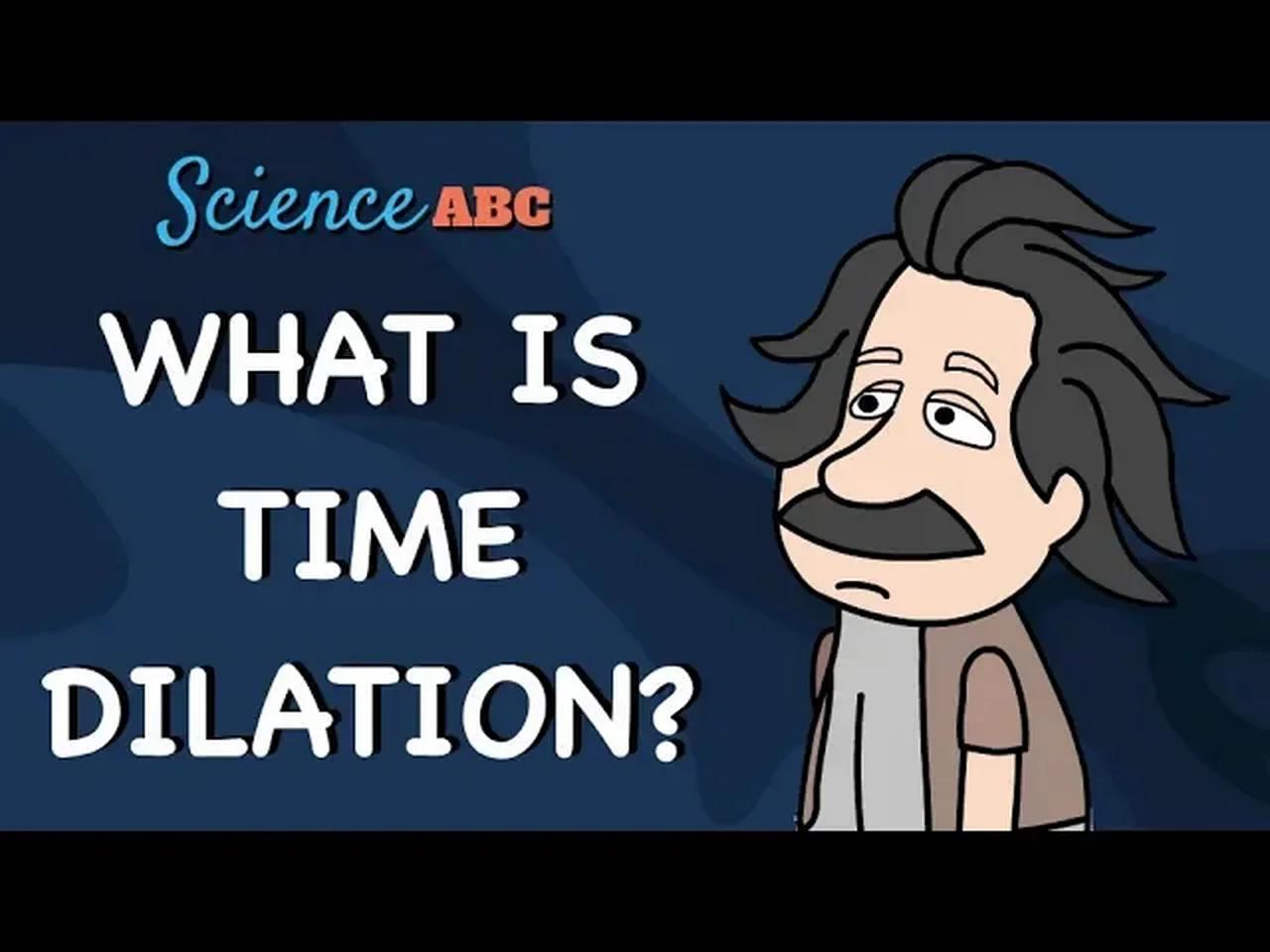
Time travel has long captivated the human imagination, inspiring countless stories, scientific theories, and philosophical debates. From H.G. Wells’ The Time Machine to modern films like Interstellar, the concept of moving through time has been a recurring theme in both science fiction and real-world physics. While the idea of traveling to the past or future may seem fantastical, it is rooted in serious scientific inquiry. This article delves into the science, fiction, and possibility of time travel, exploring how our understanding of time has evolved and what the future might hold.
The Science of Time
At the heart of time travel lies Einstein’s theory of relativity, which fundamentally changed our perception of time. According to this theory, time is not an absolute constant but rather a dimension that can be affected by gravity and velocity. In his 1905 special theory of relativity, Einstein proposed that time dilates—slows down—for objects moving at high speeds relative to an observer. This means that if you were to travel at near-light speed, time would pass more slowly for you compared to someone on Earth.
This phenomenon has been experimentally verified through atomic clocks placed on fast-moving airplanes and satellites. These clocks have shown slight discrepancies when compared to stationary clocks on Earth, confirming that time is indeed relative. However, while this form of time travel—moving forward in time—is theoretically possible, traveling backward remains a much more complex and controversial topic.
The Concept of Time Travel in Fiction

Before the advent of modern physics, time travel was primarily a literary device used to explore themes of fate, free will, and the consequences of altering the past. H.G. Wells’ The Time Machine (1895) is often credited with popularizing the idea of a machine that could transport a person through time. Since then, time travel has become a staple of science fiction, appearing in novels, films, and television shows.
Films such as Back to the Future and Doctor Who have introduced audiences to the paradoxes and ethical dilemmas associated with changing the past. The “grandfather paradox,” for instance, questions what would happen if a time traveler were to prevent their own birth. These narratives not only entertain but also challenge viewers to think about the nature of time and causality.
The Possibility of Time Travel
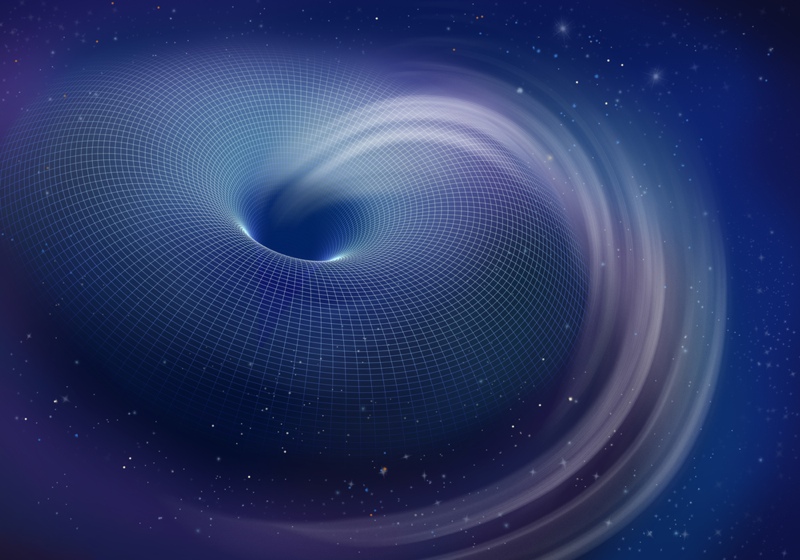
While traveling to the future is supported by current physics, traveling to the past presents significant challenges. One of the most intriguing theoretical solutions involves wormholes—hypothetical tunnels connecting two points in spacetime. If a wormhole could be stabilized and traversed, it might allow for time travel. However, this requires exotic matter with negative energy density, which has not yet been observed in sufficient quantities.
Another possibility involves cosmic strings, hypothetical one-dimensional defects in spacetime that could create closed timelike curves. These curves would allow for time loops, enabling travel to the past. However, the existence of cosmic strings remains unproven, and even if they do exist, manipulating them for time travel is far beyond our current technological capabilities.
Philosophical and Ethical Implications

Beyond the scientific and fictional aspects, time travel raises profound philosophical and ethical questions. If time travel were possible, who would have the right to use it? Could it be regulated, or would it lead to chaos? The ability to change the past could have unintended consequences, potentially altering the course of history in unpredictable ways.
Moreover, the concept of free will versus determinism becomes more complicated. If a time traveler could alter events, does that mean the future is not fixed? Or is every action already predetermined, making time travel a mere illusion?
The Future of Time Travel Research

Despite the challenges, scientists continue to explore the possibilities of time travel. Experiments involving quantum mechanics, such as entanglement and superposition, have revealed strange behaviors that could one day lead to breakthroughs. Some researchers are investigating whether quantum particles could be used to transmit information across time, though this remains speculative.
In addition, advancements in space exploration and particle physics may provide new insights into the nature of time. As we push the boundaries of our understanding, the line between science fiction and science fact may become increasingly blurred.
Conclusion
Time travel remains one of the most fascinating and enigmatic concepts in both science and culture. While the ability to move through time is still largely theoretical, the study of relativity, quantum mechanics, and cosmology continues to expand our knowledge of the universe. Whether we will ever achieve true time travel remains uncertain, but the journey to understand time itself is an ongoing adventure. As we look to the future, one thing is clear: the quest to unravel the mysteries of time will continue to inspire and challenge us for generations to come.