The Innovation of Photonic Crystal Light Sails
Researchers from Tuskegee University in Alabama have introduced a groundbreaking advancement in the field of space propulsion. They have developed a new type of photonic crystal light sail, a nanostructured material that could address significant challenges associated with traditional solar sails. These conventional sails, typically made of metal-coated polymer films, often suffer from issues such as light absorption and thermal degradation, which can limit their effectiveness over time.
How Spacecraft Propulsion Works
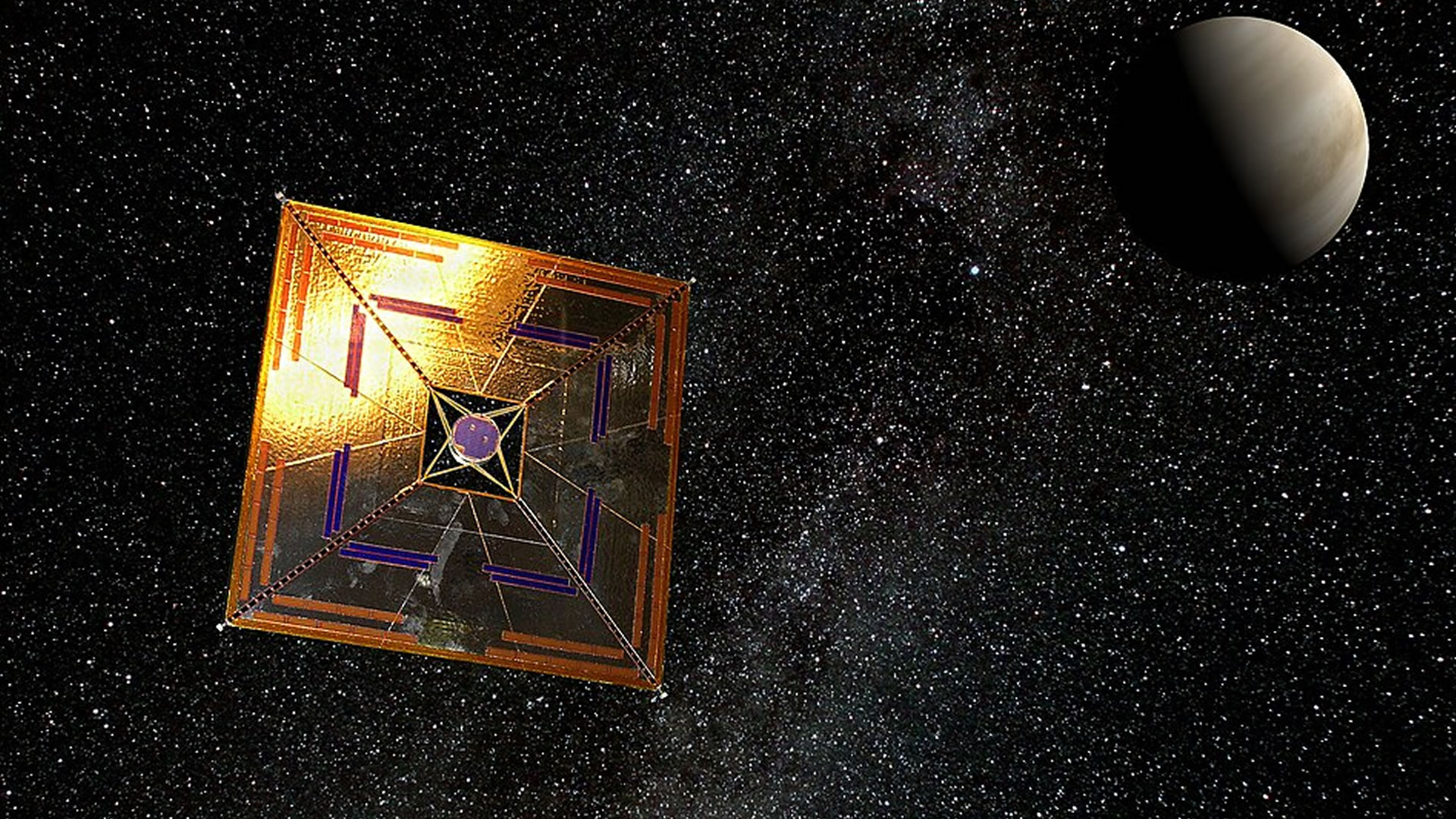
Most spacecraft today depend on chemical rockets for propulsion. These systems require fuel, which is inherently heavy and restricts the range and size of the spacecraft. However, an alternative approach is being explored through the use of light sails. Unlike traditional rockets, light sails do not rely on fuel. Instead, they utilize radiation pressure to move through space.
The concept works by reflecting light off the surface of the sail, generating a small but continuous force that propels the spacecraft forward. This principle is similar to how wind pushes a sailboat, except the “wind” in this case consists of photons—tiny particles of light. By shining a powerful laser onto the sail, the photons bounce off its surface, creating thrust.
This method forms the foundation of ambitious projects like “Breakthrough Starshot” and NASA’s IKAROS. These initiatives aim to accelerate tiny spacecraft to a fraction of light speed using photon power. However, the current designs often involve thin plastic films coated with metals such as aluminum. While these materials are effective, they tend to absorb some of the incoming light, converting it into heat. Over time, this can lead to the sail melting, especially when combined with high-powered lasers.
Addressing the Challenges of Solar Sails
To tackle these issues, the team at Tuskegee University sought to explore alternative materials for the coating of light sails. Their research led them to the use of photonic crystals, which have the unique ability to control how light moves through them when exposed to different wavelengths.
The photonic crystals used in this study feature tiny repeating patterns smaller than the wavelength of light. These structures consist of three main components: germanium pillars with a high refractive index, air holes with a low refractive index, and a polymer matrix serving as the base material. Together, these elements create a nanoscale structure approximately 100–400 nm wide, or about 1/1000 the thickness of a human hair.
This specific arrangement results in what is known as a photonic band gap. Similar to how semiconductors block certain electron energies, a photonic band gap blocks specific wavelengths of light. In practice, this means that laser light is strongly reflected, providing the necessary thrust, while light from other sources, such as the Sun, passes through the material without interference.
High Efficiency in Testing
During testing, the team found that a 1 square meter piece of the material achieved around 90% reflectivity at a wavelength of 1.2 micrometers when exposed to a 100kW laser. According to the researchers, this level of efficiency is sufficient for experimental propulsion systems.
The potential for continuous thrust is promising, as it could result in a velocity increase of hundreds of meters per second within just one hour. Although this is not yet interstellar speed, it represents a significant step forward in demonstrating the feasibility of this technology.
Dimitar Dimitrov, an assistant professor at Tuskegee University, explained the significance of the work. “By designing a narrow photonic band gap aligned with the propulsion laser frequency, the proposed sail can stay mostly transparent to ambient solar radiation while maintaining high reflectivity in the specific operating band,” he said.
He added, “A key contribution of this work is demonstrating the feasibility of constructing multi-dielectric photonic crystal structures with controlled nanoscale features. The results show that these can be engineered to combine low mass, strong wavelength selectivity, and scalable fabrication potential.”
Future Implications
The development of this photonic crystal light sail opens up new possibilities for space exploration. By improving the efficiency and durability of light sails, this technology could pave the way for more advanced and sustainable propulsion systems. As research continues, we may soon see the practical application of these innovations in future space missions.