
The History and Diversity of Oysters in the United States
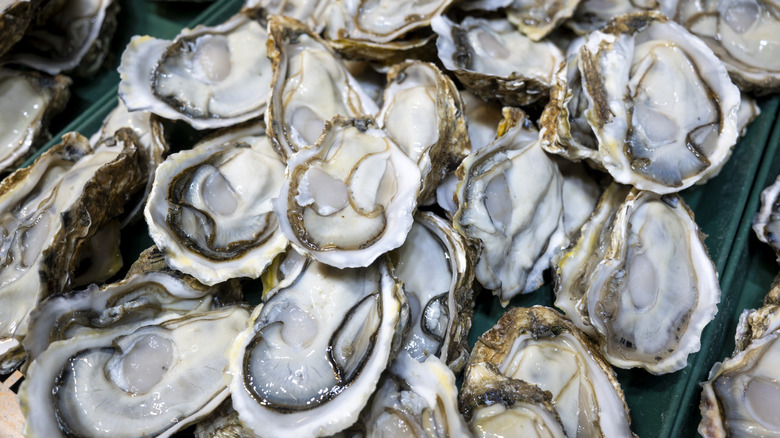
Oysters have been a staple in American cuisine for centuries, with their presence deeply rooted in the country’s food culture long before European settlers arrived. Archaeological findings reveal that indigenous communities have been consuming oysters for over 1,000 years, as evidenced by the massive accumulations of shells found at ancient sites. While there are numerous types of bivalves, only two main species are commonly found in the United States: the Pacific (Crassostrea gigas or Magallena gigas) and the Eastern or Atlantic (Crassostrea virginica).
The primary distinction between West Coast and East Coast oysters is not just geographical but also in taste. “East Coast oysters tend to be brinier due to their saltier environment, while West Coast oysters are typically raised in protected bays and estuaries, resulting in a milder flavor,” explains Robert DiGregorio, director of seafood quality at New York City’s Fulton Fish Market.
Although Crassostrea virginica is the dominant East Coast species, another less common variety exists: Ostrea edulis, also known as European Flat or Belon. According to DiGregorio, “Belons are not widely popular, accounting for less than 1% of all East Coast oyster harvests.” Most restaurants on the East Coast serve Crassostrea virginica, which exhibits a wide range of varieties depending on its growing location. Popular examples include Blue Points, Malpeques, Wellfleets, and Chincoteagues.
Blue Point Oysters
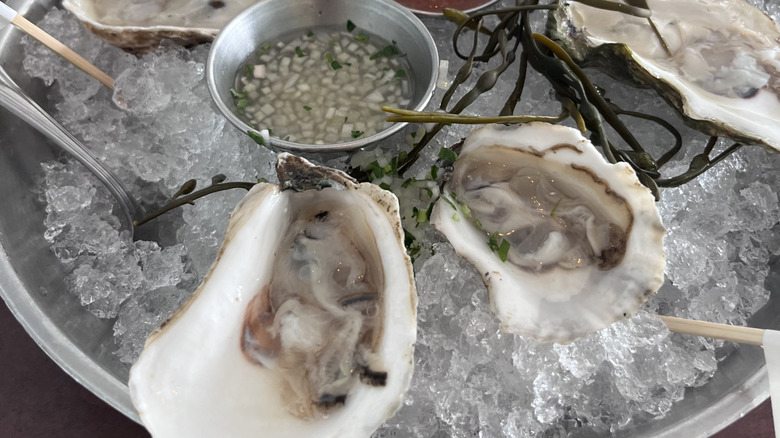
Blue Point oysters are among the most recognizable and widely consumed varieties. Named after a Long Island town, the term has evolved into a generic label for oysters grown in the Long Island Sound. These oysters have oval shells that range from brown to tan to green, measuring approximately 3.5 inches with a medium cup.
Known for their mild flavor, Blue Points are easy to eat and shuck. “They are shucker-friendly due to their well-defined hinge and consistent shape,” DiGregorio explains. Their thick shells also reduce the risk of breaking during shucking, making them a favorite among both novices and experts.
Chincoteague Oysters
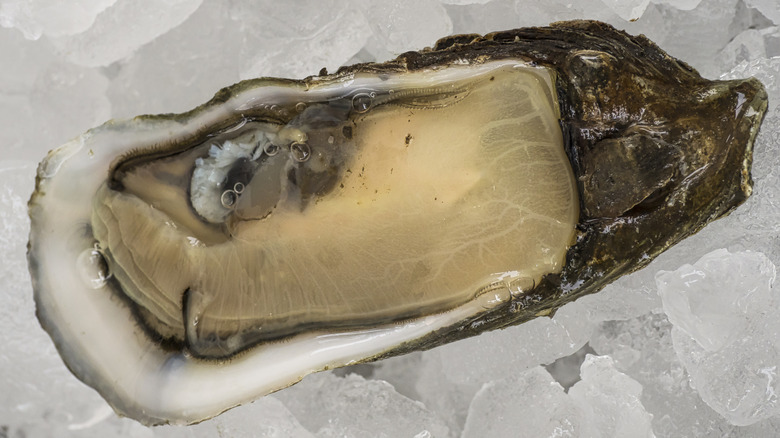
Chincoteague oysters originate from an island off the coast of Virginia, where oystering has been a vital part of the local economy since the mid-1800s. These oysters, sometimes referred to as Chincoteague salt oysters, are known as the “aristocrat of the oyster family.”
“Chincoteague oysters have a strong salt punch, which gives them their name,” says DiGregorio. Their shells measure between 2.5 and 3.5 inches, with a grayish to greenish-brown color. The oysters themselves are firm and plump, with a medium cup.
Malpeque Oysters
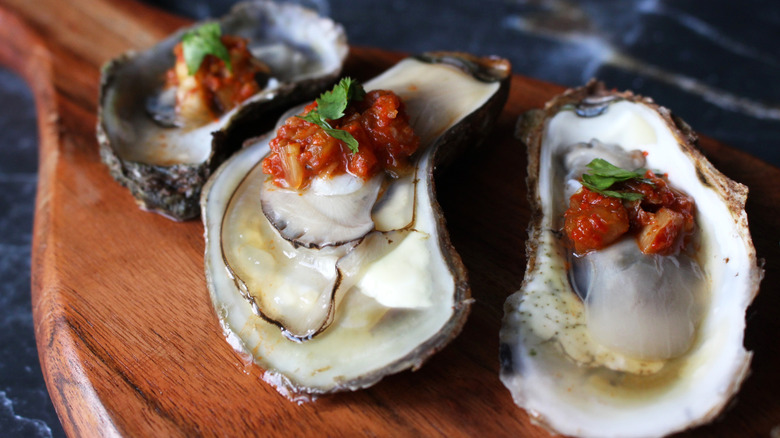
Malpeque oysters take their name from Malpeque Bay on Canada’s Prince Edward Island. These oysters have a unique two-cup structure and are larger, ranging from 3 to 6 inches. They have a greenish shell and a balanced flavor that is neither too mild nor too briny.
Prince Edward Island produces 26% of Canada’s oysters and 74% of those from the Atlantic shores. In 2024, over 14 million pounds were harvested, valued at nearly $20 million. However, recent challenges such as MSX and dermo disease have threatened the Malpeque population.
Wellfleet Oysters
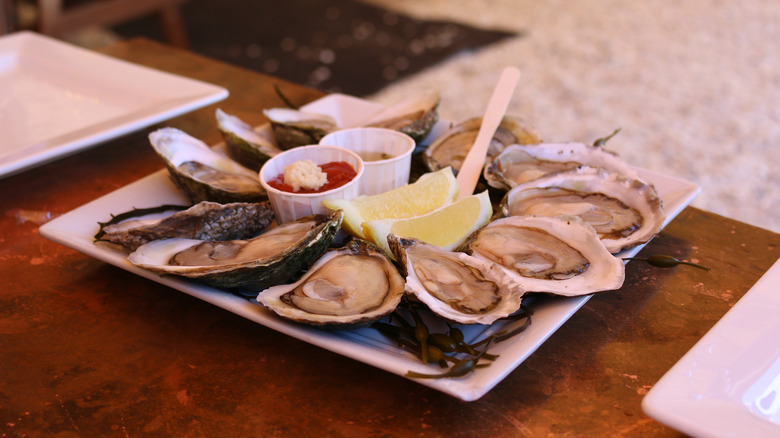
Wellfleet oysters, named after the Massachusetts town, are often considered the gold standard of East Coast oysters. Some even say they have their own theme song, with historical references dating back to the 17th century.
DiGregorio describes Wellfleets as teardrop-shaped and more elongated than Blue Points, measuring about 3.5 inches. They are known for their strong brininess, with some detecting a seaweed-like flavor. Despite their saltiness, they remain a top choice for oyster lovers who prefer a more intense taste.
For more insights into food and drink, consider joining The Takeout’s newsletter to stay updated on taste tests, food news, deals, recipes, and cooking tips.