A Moment of Reflection
On a Sunday afternoon in March 2018, I stood with a group of people outside the Gage Hotel’s White Buffalo Bar in this far West Texas town and tried not to stare. As the slender, gray-haired man in jeans and long-sleeved T-shirt waited for his ride, we were requested not to engage him in conversation, take photos or ask for an autograph. We were told he was very tired after a weeklong tour of the Big Bend region. He looked it. Ten weeks after his visit, Anthony Bourdain died by suicide in a Strasbourg, France, hotel room. The Big Bend episode of “Parts Unknown,” his award-winning culinary/cultural TV series, aired that October. To this day, when I’m on the Rio Grande, I’m haunted by the final scenes of that show.
Sitting cross-legged in green grass on the Texas bank of the river, Bourdain stares up at the 1,500-foot-high limestone walls of Santa Elena Canyon. Beside the narrow river dividing the U.S. and Mexico, he muses about manmade walls. “I’ve been to a few places where they do have a wall,” he says. “Few things are uglier or are more of an indication of an utter failure of otherwise smart people to figure (expletive) out.”
What Bourdain warned about – what Big Bend-area residents found “unimaginable,” to quote an Alpine bookstore owner – seemed to be happening. Starting in fall, with blitzkrieg speed and almost no public comment, the Trump administration began pushing forward to gouge an invasive border wall along the Rio Grande through Big Bend National Park and the adjacent Big Bend Ranch State Park.
The Cost of a Wall
I suspect that Donald Trump and the high-level aides who serve him on this issue had no idea that their wall would cause irrevocable harm along the 118-mile border through some of the most magnificent terrain in North America. And it seems likely that they don’t care, either.
‘Got to tear down mountains’
Since Trump glided down his gilded escalator more than a decade ago, we’ve grown accustomed to his “border wall” obsession, and yet “wall” can be misleading. I’d pictured something like a super-sized backyard privacy fence made of steel. But as Fort Davis resident James King reminded me last week, Trump’s border wall wouldn’t be a narrow barrier.
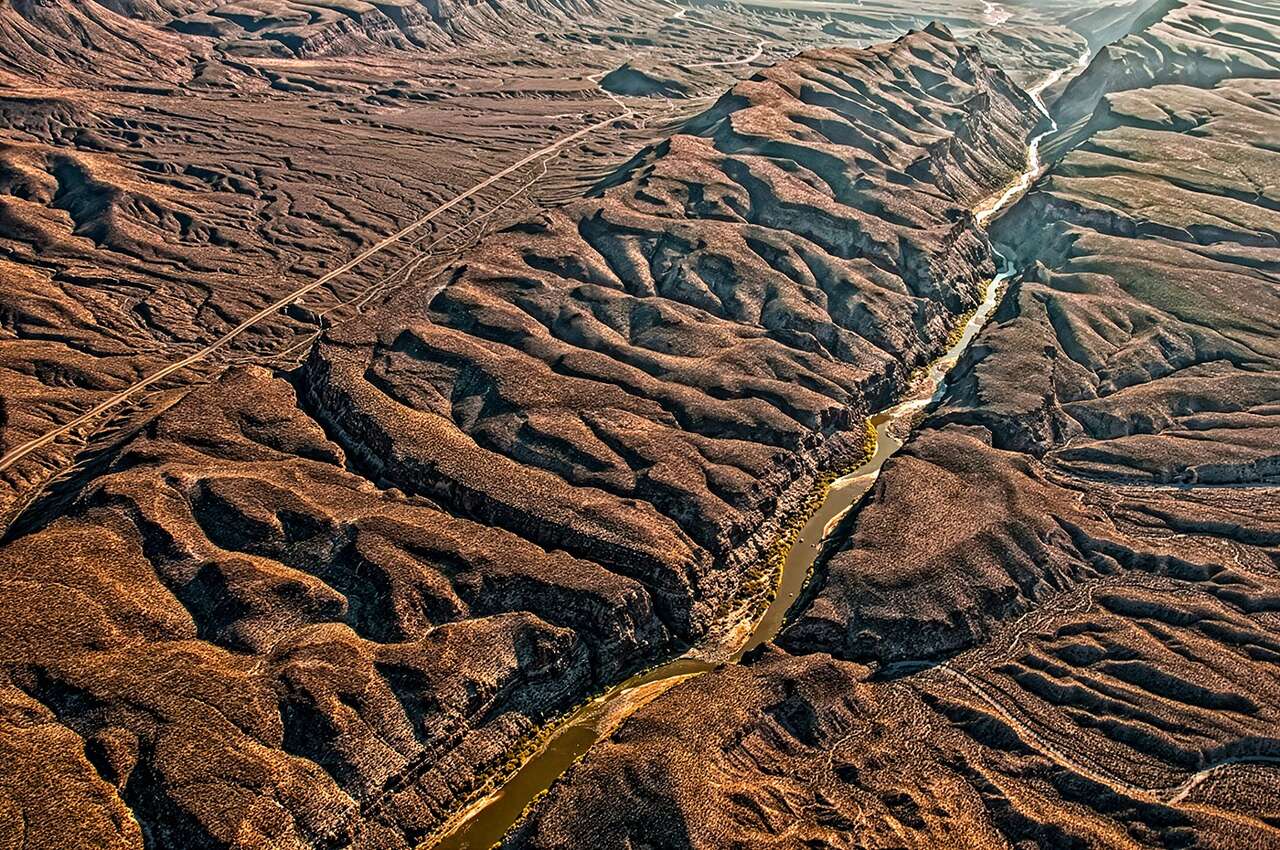
“What you’ll see are two 30-foot steel walls with a road in between and a service road on each side,” says King, who is a rancher and descendant of Capt. Richard King, founder of the famed South Texas ranch of the same name. “They’ve got to tear down mountains. They’ve got to go up and down. It’s a massive project thousands of feet from the river.”
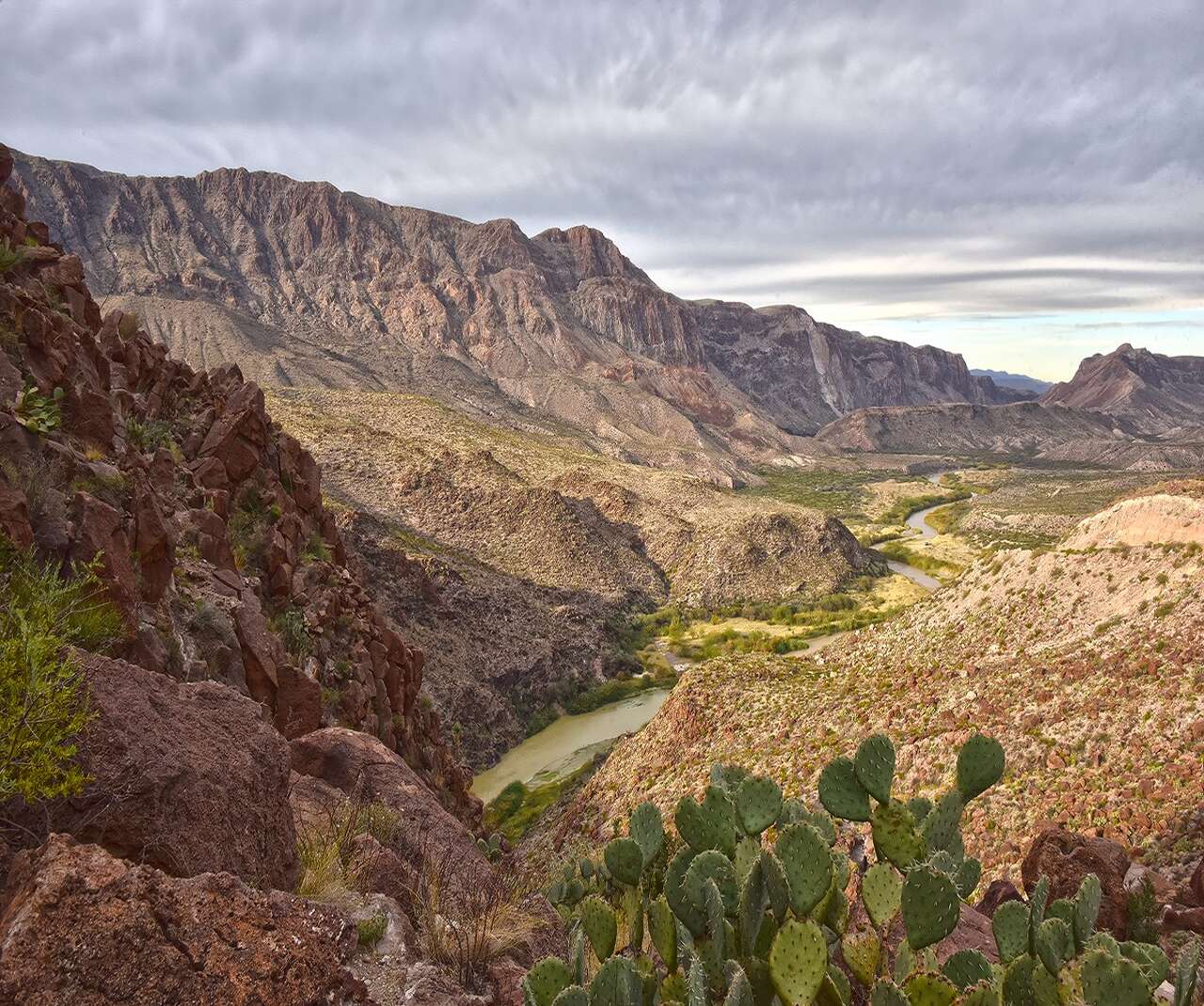
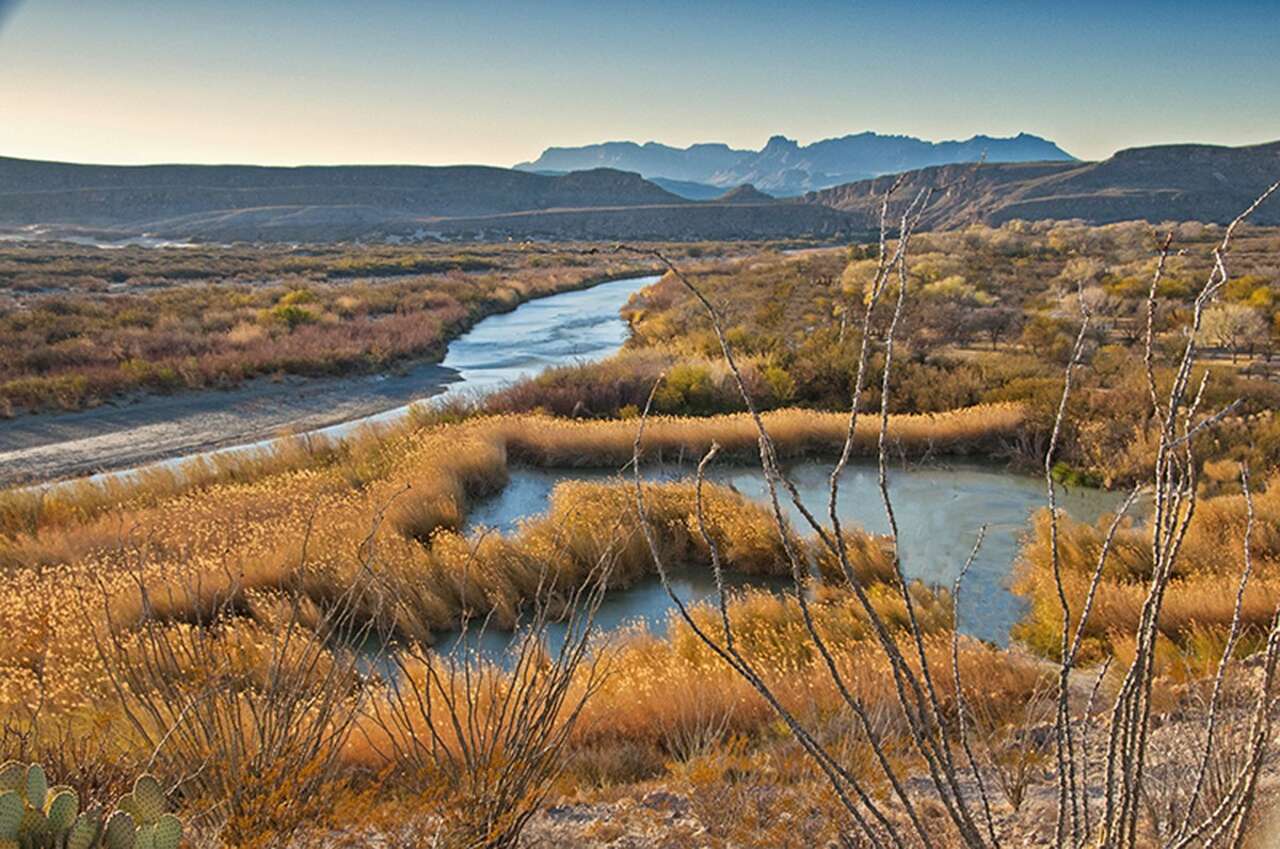
Big Bend, one of America’s most beautiful wild places, encompasses more than 800,000 acres. Within its boundaries are an entire mountain range, fossils dating back at least 100 million years and evidence of inhabitants dating back 4,000. Its three distinct ecosystems – mountains in majestic solitude, weather-stressed desert and cathedral-like river canyons – nurture biodiversity that rivals any region on the continent. The adjacent Big Bend Ranch State Park is just as spectacular.
Still isolated, still untamed, the “Great Bend,” as early explorers called it, is basically the last frontier of a rapidly urbanizing Lone Star State. Driving the 50-mile stretch of state Highway 170, known as River Road, from Lajitas to Presidio, following the winding course of the Rio Grande through cliffs, canyons and gorges, past majestic mountains on both sides of the river, it’s impossible to imagine the feat of engineering that could force a wall through the area. It’s impossible to imagine a legitimate reason for such folly.
As local officials will tell you, the rugged terrain itself is a border wall. Over the years, the number of undocumented individuals crossing into the U.S. in the Big Bend region has always been lower than in more urban areas. Unauthorized border crossings have dropped even more dramatically since Trump took office last year. Now they’re at historic lows: 3,096 apprehensions across 517 miles in fiscal year 2025 – roughly six people per mile of border.
The cost to build a wall over, around and through rugged mountains, steep canyons and harsh desert terrain is an estimated $30 million to $40 million per mile. Not counting cost overruns or continued maintenance and staffing, that works out to at least $5 million to stop one person per year from crossing. And that’s not counting the damage to Big Bend and West Texas.
A Stealth Operation
The administration’s border-wall invasion was basically a stealth operation from last October until February 17. That’s when two reporters, Sam Caras of the weekly Big Bend Sentinel and Mary Cantwell of Marfa Public Radio, noticed that on the DHS website, something had changed. Previously, the site had said that the Big Bend stretch of the Rio Grande was monitored with so-called SmartWall technology, including drones. But now the website said an actual wall was planned.
Rumors began spreading that DHS was offering landowners seven-figure inducements to make their ranches available for staging areas, concrete-mixing plants and man camps housing several hundred workers. Surveyors were showing up along the river. Heavy construction equipment and trucks loaded with steel beams from El Paso began to clog roads.
As word spread among residents of the small towns that dot the Big Bend region – Marathon, Alpine, Marfa, Terlingua and others – shock seemed to be the initial reaction, followed in stages by sadness, anger and ultimately, resolve to block the wall, no matter how steep the odds.
Full disclosure: Wife Laura and I have been part-time residents of Marathon, the tiny town that declares itself “The Gateway to the Big Bend,” since 2016. We’re fascinated by Big Bend’s colorful past; we’re worried about its future.
West Texans began organizing. Marfa, Alpine, Terlingua and Marathon have been holding public forums. Ad hoc groups such as the nonpartisan No Big Bend Border Wall relied on social media to reach both the general public and public officials. They developed strategies to fight back through the courts, through public awareness campaigns and by telling personal stories – and, if necessary, through strictly disciplined civil disobedience. They felt they have no choice.
Kendra DuBois, the owner of Front Street Books in Alpine, understands. “People who have been coming here for years will say, ‘I just don’t think I can look at it,'” the Alpine native says. “They’ll stay away.”
DuBois reminded me last week that tourists spend $59 million annually in the area. “As a business owner,” she said, “spring break is what gets us through the year. If we had a loss of tourist dollars, that’s our death knell.”
It would likely have been the business death knell, as well, for Joe Lorenz and Tara Shackelford, co-owners of Hidden Dagger Adventures. In business since 2019, the husband-and-wife team – both in their early 30s and expecting their first child on July 4 – offers jeep tours, hiking treks through the Big Bend backcountry and multi-day rafting trips on the Rio Grande. Their company cannot function without unfettered access to the river.
“If this happens, we have to make a plan. A plan to leave,” said Lorenz, a Wisconsin native and veteran firefighter for the U.S. Bureau of Land Management. His wife, a seventh-generation Texan, nodded in agreement.
Along U.S. Highway 90, in Marathon’s semblance of a downtown, the French Company Grocer is the only food store within a 30-mile radius. Sam Stavinoha, the 37-year-old proprietor, serves a loyal local clientele, plus thousands of park visitors year-round. To supplement a grocer’s slim margins, he has turned The French into something of a “clean, well-lighted place,” where folks gather for Friday-night burgers, live music, community gatherings and the occasional Gospel brunch on Sundays.
“As Texans, we will go to great lengths to find a wild place,” Stavinoha said on a recent hot afternoon. “We have friends who drive from Houston, from Dallas, from Texarkana – you name it – to come out here to be in a wild place, to be in a pristine place. People much wiser than us a long time ago made a very strong and intentional effort to protect this for a reason, and it is extraordinarily foolish to throw all that away.”
If visitors stop coming to Big Bend, Marathon will be a ghost town, as Bryan well knows, but the cost of a border wall would extend beyond economics. At the park’s Panther Junction Visitor Center last week, I talked to a young park ranger standing next to a display of hides from native fauna – red fox, skunk, beaver, bobcat, etc. – along with skulls of a black bear and a mountain lion, both native species. He asked visitors strolling by to guess what the animals were.
“What would happen to these animals if they couldn’t get to the river, if they couldn’t migrate back and forth?” I asked.
He grimaced: “I’m not allowed to say.”
Archaeologist David Keller lives in a tiny community called Redford, within a mile of the Rio Grande. “The things we’re finding on the river are mind-blowing,” he said. “We’ve found 4,000-year-old dart points for atlatls (handheld spear-throwers) showing the different stages of manufacturing. We’ve found entire village sites – adobe, rock and jacal – where the building started about 1,200 years ago.”
A border wall could obliterate Keller’s work sites.
A Question of Necessity
Why spend such a gargantuan amount on something that’s not needed? That’s the question Ronny Dodson asked. A conservative Democrat, he’s been the Brewster County sheriff for 26 years. He believes in border security and is proud of his close cooperation with the Border Patrol. Even when the relatively small number of undocumented coming into Brewster County increased to what he calls “a flood” during the Biden administration, he never felt overwhelmed.
“There are places like Big Bend National Park and the state park, you’re going to ruin them, destroy the beauty and the magic, by putting a wall in,” he said.
Dodson’s counterpart to the east is Terrell County Sheriff Thaddeus Cleveland, a Border Patrol agent for 26 years before becoming sheriff of a county that Sanderson resident Keirstin Pratt calls “the forgotten stepchild of the Big Bend area.” Cleveland, a stalwart Republican in the MAGA mold, also believes in border security. He doesn’t believe in the wall for his vast and mostly empty rural county.
“This should not be a partisan issue,” the sheriff posted on Facebook recently. “A wall accompanied by stadium lighting and an extensive road network would permanently alter one of the last truly unspoiled stretches of borderland in the country.”
State officials have been silent for the most part, although former Texas Land Commissioner Jerry Patterson wrote on social media that anti-wall sentiment was growing among his fellow Republicans. “Please avoid making this fight partisan or about any other issue than the terrible impact a physical wall will have on this Texas treasure,” he wrote.
“Why use a bazooka to kill a gnat?” That was the response of Susan Combs, another former Texas land commissioner. She’s also a third-generation Big Bend-area rancher and served as assistant secretary of the Interior during the first Trump administration.
Greg Henington, a Republican, was elected Brewster County judge in 2022. “I know that we’re going to have to have some sort of wall,” he said last week, “but couldn’t we have some sort of virtual wall? What purpose does it serve anyone to build this monstrosity in a spectacularly beautiful area?”
A Hopeful Turn?
It appears that someone in the Trump administration was asking that question too. On Wednesday – the day that President fired Kristi Noem, and as we were going to press with this story – the president fired Kristi Noem. And that same day, a Customs and Border Patrol map showed an adjustment. Instead of a wall through the national park, the website said the agency would rely on “detection technology.”
West Texans are celebrating cautiously. The border along Big Bend Ranch State Park may still be under threat of an actual wall. And even for the national park, they know that with this administration, no news is ever final. A website statement isn’t a binding promise.
So they’re not letting down their guard. They remain ready to fight as needed. They know the stakes.
On private land 12 miles west of Valentine, in a pass through the rugged Sierra Vieja mountain range, are the ruins of Camp Holland, an army camp established in 1918 during an earlier spasm of periodic border insecurity. This one involved apprehension about Pancho Villa. Abandoned three years later, the camp’s native-stone structures – barracks, a mess hall, officers’ quarters – are in surprisingly good condition. They may still be standing a hundred years from now.
And so could a massive wall, its giant steel beams deeply embedded in concrete. Hundreds and hundreds of years from now.
Joe Holley is a Pulitzer-winning editorial writer and was the “Native Texan” columnist for the Houston Chronicle.