
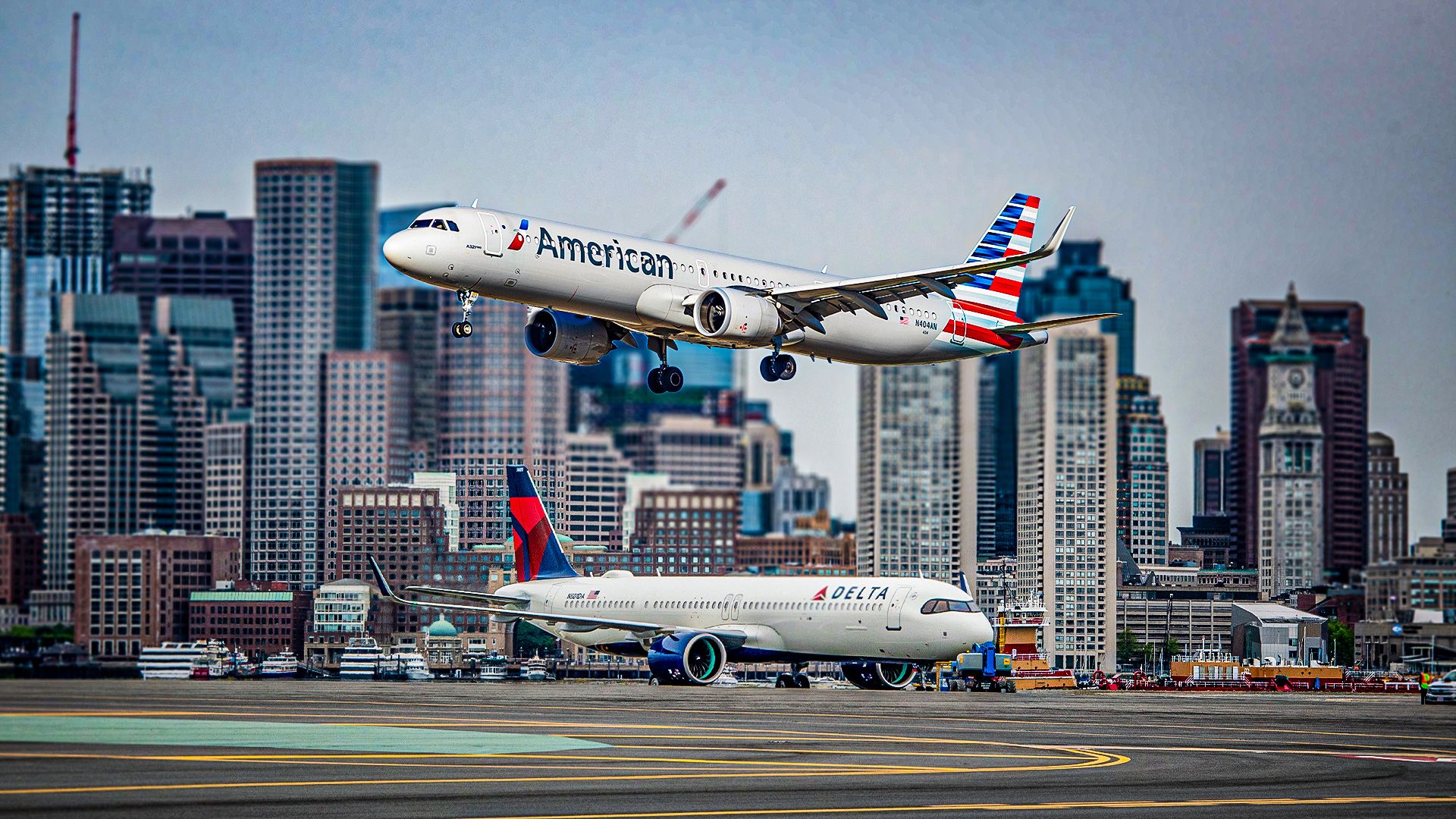
The Rise of the Airbus A321neo in U.S. Airline Networks
Single-aisle jets have traditionally not been seen as long-haul workhorses, but theAirbus A321neohas steadily pushed the boundaries of what narrowbody range can achieve. With new-generation engines, aerodynamic improvements, and smarter cabin configurations, the A321neo allows airlines to open thinner routes, increase frequency in premium-heavy markets, and right-size capacity where widebodies would be too large. For major U.S. airlines, it has become a key tool for network planning, linking hubs to high-yield leisure destinations, stretching transcontinental flying, and testing the outer edges of stage lengths that still make operational and financial sense.
This article will compare howAmerican Airlines,Delta Air Lines, andUnited Airlinesuse the A321neo, focusing on which carrier operates the longest services with this aircraft. We’ll examine what these long flights mean in terms of great-circle distance, scheduled block time, and the constraints that come with running narrowbody operations near the top of their range. Additionally, we’ll look at each airline’s network, cabin layouts, and the strategic purposes these routes serve.
A Brief Overview of the Airbus A321neo
TheAirbus A321neois the largest member of the A320neo family, designed to carry more passengers farther while burning less fuel than its predecessor, the A321ceo. It is one of the most dynamic and capable long-range models to enter the skies, appreciated by airlines for its flexibility and versatility. The aircraft can be powered by either theCFM LEAP-1Aor thePratt & Whitney PW1100G, the latter being an advanced geared turbofan engine.
The A321neo also features aerodynamic refinements, such assharkletson its wings, which improve fuel efficiency, reduce emissions, and lower operating costs. In typical two-class configurations, the aircraft seats between 180 and 220 passengers, though cabin layouts vary significantly depending on the airline’s objectives.
Its blend of capacity and range allows carriers to upgauge busy domestic routes, add frequency with lower trip costs than widebodies, and open long-and-thin markets that do not support larger aircraft. The platform has also spawned longer-range variants, such as theA321LRandA321XLR, which are capable of true transatlantic missions.
How Do These Carriers Use the Jet?
Across the three major U.S. legacy carriers, theA321neois fundamentally a network tool for right-sizing capacity on high-demand routes while keeping unit economics competitive. Each airline uses the aircraft differently, reflecting their unique strategies and market positions.
American Airlines
American Airlines primarily uses the A321neo as a domestic and near-international workhorse. The jet upgauges heavy hub-to-hub and hub-to-leisure markets, replacing older narrowbodies with a more fuel-efficient platform. The airline emphasizes consistent, high-utilization flying and fleet simplification.
The longest A321neo missions for American skew toward long-and-thin flying, often targeting niche transatlantic markets. For example, the route fromJFK to EDI(Edinburgh) is around 3,256 miles (5,240 km), showing the airline’s willingness to operate on relatively niche transatlantic routes with premium demand.
Domestically, the longest stage lengths cluster aroundAlaska and Hawaii, with routes likeANC to DFW(Anchorage to Dallas/Fort Worth) running around 3,042 miles (4,896 km). These routes are operated at very high volume, with over 400 flights annually and more than 78,000 seats available.
Delta Air Lines
Delta deploys the A321neo as a premium-friendly narrowbody, adding seats and range with strong economics. The airline often places the jet on high-yield domestic corridors, transcontinental markets, and dense leisure routes. Delta leverages the aircraft to offer an improved customer experience and protect operating margins as it retires older planes.
The airline’s longest A321neo flight isANC to DTW(Anchorage to Detroit), covering 2,985 miles (4,804 km). However, the real pattern lies in Seattle-linked cross-country services, including routes to Florida cities likeMiami. Delta also uses the A321neo for island and sun-leisure destinations, such asHawaii and the Caribbean.
United Airlines
United Airlines extensively uses the A321neo as a capacity-and-efficiency lever in its hub system. The airline adds gauge on busy domestic routes, increases seats on constrained slots, and creates room for growth while preserving flexibility over widebodies.
The longest A321neo stage length for United isIAD to SFO(Dulles to San Francisco), at 2,419 miles (3,893 km), although the route is rarely used with only five flights in each direction. The airline’s longest scaled deployment is theChicago to San Juanroute, covering 2,072 miles (3,335 km) with 443 flights in each direction.
United also uses the A321neo for high-frequency, high-capacity hub connections, especially those involvingChicago. Nonstop services fromORD to SFOare among the highest-frequency services on the list.
What Is Our Bottom Line?
At the end of the day, theA321neois a mid-capacity model that has proven to be versatile enough to operate all kinds of services. Its long-range capabilities and impressive efficiency allow it to push widebody-like range on some shorter-range transatlantic missions, making it ideal for certain operations.
While the three major U.S. carriers may have different approaches to deploying the A321neo, they all follow a similar playbook: focusing on destinations where the jet’s combination of range and capacity can make a compelling economic case.
Legacy carriers are interested in network optimization, using aircraft as efficiently as possible to serve the destinations they are interested in. Therefore, theA321neowill continue to be a core element of international airline operations for years to come.